

I spent the beginning of last working week in Berlin. As I was checking into my hotel, I was told to download an app that would serve as my room key throughout my stay. I have to admit, I wasn’t completely sold on the idea of trusting an unfamiliar app with the security of my hotel room. But since I had little choice, I downloaded it and got into the lift. By the time I reached my door, the app was ready. And then I spotted it, in very small but perfectly legible lettering: Seos by ASSA ABLOY. And just like that, my concerns disappeared.
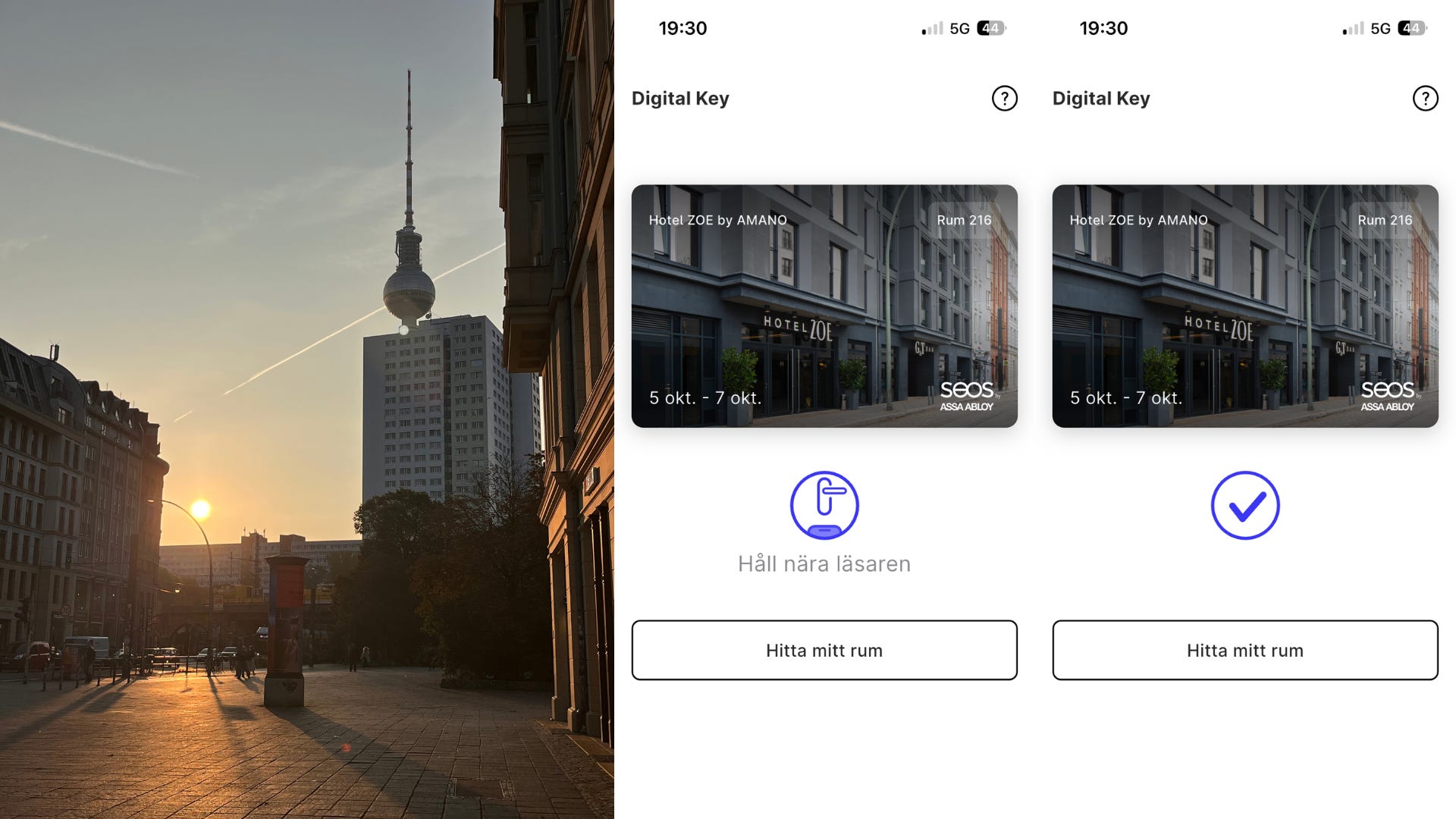
You see, I wore an ASSA key around my neck when I was eleven. Twenty years later, when we bought our house, we installed an ASSA ABLOY lock on our front door. For as long as I can remember, I’ve associated the name with safety and security. So here I was, trusting it again in a hotel corridor in Berlin. I knew nothing about the technology behind that digital key. Apparently, I didn’t need to.
What I didn’t know before writing this article was that ASSA ABLOY had already started testing mobile hotel keys in Stockholm back in 2010. In 2012, Seos was commercially launched. Since then, the company’s solutions have continued to develop across digital identities, electronic access control and automated entrances. Makes sense, doesn’t it?
The technology has changed enormously since I first wore that key around my neck. But the underlying purpose is remarkably familiar: making sure the right people can get through a locked door. And apparently, that was enough for me.
When Reputation Gets There First
Now, imagine that the app had displayed the name of another established company. One that you’d known for years, but for something completely unrelated to security. It could have produced an equally secure digital key, employed equally competent engineers and produced an equally secure digital lock. Would I have felt the same relief on seeing its name? I doubt it.
Plenty of established companies have expanded through acquisitions, developed new services or entered new markets. They’ve spent considerable money acquiring capabilities their existing customers may have no idea they possess. And so their reputation can be excellent, their new offer equally so, while potential customers still don’t think of them when that particular need arises.
The resulting commercial limitation isn’t necessarily a lack of capability.
It may be a lack of perceived relevance.
And for newer businesses, the situation can be even more frustrating. They haven’t yet had the opportunity to establish the associations that make an unfamiliar offer feel credible. You can have exactly what a potential customer needs, and still never make it onto their shortlist. No pitch to lose. You weren’t even invited.
The Reputation Stretch Test
So, how much further could your existing reputation take your business? And what might it be preventing people from seeing? Here’s something to try. Five minutes, a piece of paper and four questions.
1. What are we known for?
Write down three things you believe potential customers associate with your company. Be clear about which are based on actual customer feedback and which are your own assumptions.
2. What else can we do?
Identify one existing service or capability that potential customers may not naturally associate with your company.
3. What gives us permission?
Look at your first two answers. Is there an existing association that could make this additional capability feel credible?
Think ASSA ABLOY: physical locks → secure access → digital keys. And if you can’t find a natural connection, that’s worth knowing too.
4. What’s missing?
What would a potential customer need to know, see or experience to believe you could deliver this additional service?
You won’t know what the entire market thinks after five minutes with a piece of paper. But you may discover something about your business that deserves a closer look.
The Key I Already Trusted
Back in Berlin, the ASSA ABLOY name occupied a tiny corner of my phone screen. It wasn’t even the app’s main brand. I find it rather amusing that a name I first got to know through a metal key around my neck at eleven could make me feel better about waving my phone at a hotel door decades later. The technology had certainly moved on and my trust in the name had come along for the ride.
Read the Signs looks at what companies teach the market to believe about them. Including the things the market keeps believing long after the company has moved on.